

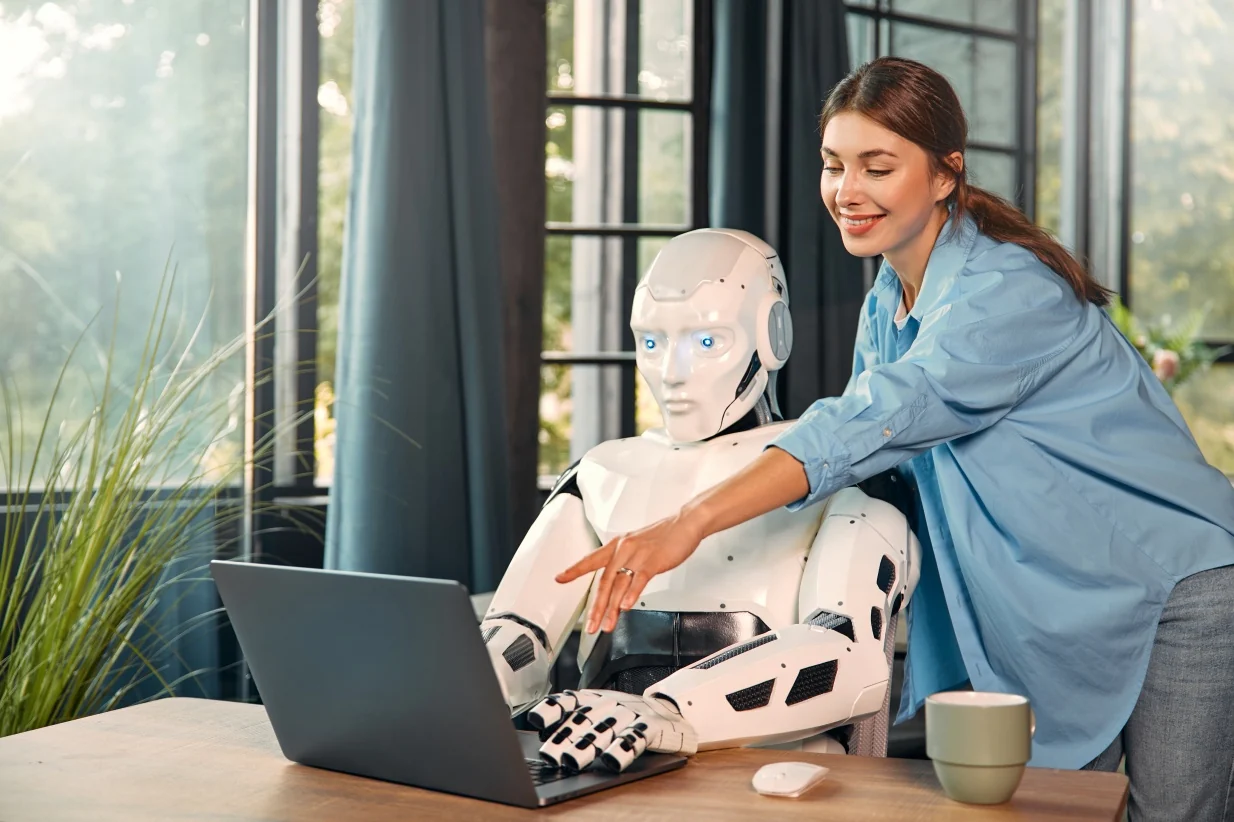
SKYNET SERVANT AI
Skynet Servant AI vs. OpenAI ChatGPT Tasks
Skynet Servant AI and OpenAI ChatGPT Tasks are both designed to assist users with various tasks using AI technology. However, they differ significantly in their approach and functionality. Skynet Servant AI is more than just an AI model; it is a multi-purpose agent integration platform that seamlessly handles IoT, data analysis, automation, and more. Compared to OpenAI ChatGPT Tasks, Skynet Servant AI stands out in terms of scalability, physical environment integration, and user experience. Experience a smarter, more efficient work environment with Skynet Servant AI today!
Servant AI Agent for the Physical World
- e.g. Find today's Tesla stock price information and send it to 010-xxxx-xxxx.
- e.g. Check the refrigerator, and if there is no milk, order milk from Amazon.
How It Differs from OpenAI ChatGPT Tasks
Unlike OpenAI ChatGPT Tasks, Skynet Servant AI does not run in a separate workspace; it operates in the same environment as an ordinary prompt, which makes a seamless user experience possible. External tasks that other developers or users want to connect can be easily added and edited through the Linkbricks Horizon-AI Workflow, and workflows can be shared with others just as easily. It also integrates readily with IoT beyond the internet, enabling No-Code interaction with the physical environment through an LLM.
Integration of Diverse LLMs and Agents
Through the Linkbricks Horizon-AI Workflow, Skynet Servant AI integrates a wide range of LLMs (Language Learning Models) and external agents to handle even complex scenarios with ease.
- Goes beyond simple Q&A to carry out actual external tasks.
- Executes a variety of physical and digital tasks through prompts alone.
Seamless Environment
- Skynet Servant AI works in the same environment as an ordinary prompt, without a dedicated workspace, so that users can make use of the technology naturally.
Scalability and Shareability
- External tasks can be easily added and edited through the Linkbricks Horizon-AI Workflow, and workflows can be conveniently shared with other users.
No-Code IoT Integration
- Supports IoT integration so that users can interact with the physical environment without any programming.
SKYNET SERVANT AI Architecture
The architecture of SKYNET SERVANT AI consists of the following key components.
- Linkbricks Horizon-AI Workflow — Core function: integrates and orchestrates diverse LLMs (Language Learning Models) and external agents. Purpose: handles complex multi-step workflows and supports smooth interaction across a variety of tools and data sources. Scalability: provides an intuitive interface for easily adding, editing, and sharing workflows.
- Multi-LLM and agent integration — leverages multiple AI models and agents at the same time to execute tasks across many domains. Goes beyond simple Q&A to support data analysis, automation, and the execution of real-world tasks.
- IoT and smart device connectivity — integrates with IoT devices and smart appliances to interact with the physical environment. Supports task automation such as managing a smart home environment and ordering products.
- No-Code integration — IoT workflows can be configured without any programming.
- Real-time monitoring and alerts — tracks stock prices, weather, and other time-sensitive data in real time. Delivers timely notifications and insights to users to support fast decision-making.
- Advanced data analysis and storage — analyzes complex data such as financial data, news, and market trends. Provides actionable insights and stores results so they can easily be reused when needed.
- Automation framework — automates repetitive tasks and multi-step workflows such as writing financial reports and configuring a smart home. Reduces manual work and improves productivity across many areas.
- Prompt-based interaction — works naturally in a prompt-based environment without a separate workspace. Gives users an intuitive experience of interacting with AI conversationally.
- Task collaboration and sharing — enables workflow sharing and collaboration between users. Strengthens teamwork and extends user-tailored workflows.
- Prediction and decision support — provides predictive analysis and recommendations based on data trends and environmental factors. Supports user decision-making with minimal effort.
- Integration of physical and digital systems — connects digital automation with physical interaction through IoT and smart devices. Builds an integrated ecosystem in which digital tools and the physical environment work in harmony.
Scenario Responses
- Stock Data Alerts — Find the stock price and related news for Samsung Electronics at 10 AM tomorrow and send it to me via SMS.
- Financial Report Creation and Delivery — Analyze Tesla's 2024 second-half financial statements and format them into a report. Then email it to the CEO.
- IoT and Smart Appliance Integration — Analyze the photo of my fridge, identify missing items, and automatically order them from Amazon.
- Investment Analysis and Data Retention — Analyze Apple's major news and its full financial data for 2025. Save the data for future reference, and notify me when the task is complete.
- Smart Home Automation — If the temperature drops below 0°C tomorrow morning, raise the heating temperature in my home to 25°C.
Deployment
- Cloud
- On-Premise
Problems Solved by SKYNET SERVANT AI AGENT
- Automated Data Monitoring and Alerts — Monitor stock market data in real time and send alerts at user-specified times. Provide related news and information for quick decision-making.
- Complex Data Analysis and Report Generation — Analyze large-scale financial data or complex datasets and convert them into professional, intuitive reports. Automatically send reports to designated stakeholders for efficient task execution.
- Analyze images from smart appliances, such as refrigerators, to identify missing or low-stock items. Integrate with e-commerce platforms to automatically order required products.
- Investment and Corporate Analysis — Perform in-depth analysis of key company news and financial data. Store analyzed data for future use and notify users upon task completion, improving workflow management.
- Adjust home environments, such as temperature and lighting, based on external environmental data. Provide proactive automation features using forecast data.
- Simplification of Multi-Step Workflows — Handle complex user tasks through simple prompts. Integrate various data sources and tools to enhance accuracy and speed.
- Execution of Advanced Tasks Without Programming Knowledge — Enable users to execute advanced tasks, such as IoT management and data analysis, with a No-Code approach. Allow anyone to utilize advanced functionalities without technical barriers.
- Task Sharing and Scalability — Create and share customized workflows, enhancing collaboration and productivity. Easily add or integrate new tasks for a flexible and scalable system.
- Real-Time Decision Support — Analyze various datasets to provide timely insights. Support users' decision-making with personalized automation tasks.
- Integration of Physical and Digital Environments — Enable interaction between physical environments and digital systems through IoT devices. Support the creation of smart, integrated living environments.
Technology Gallery
6 imagesTechnology
- LLM BuilderLinkbricks Horizon-AI LLM Builder: a new standard for language model development. The Linkbricks…
- LLM ServerLinkbricks Horizon-AI Server: a high-performance AI model deployment platform. The Linkbricks Ho…
- LLM WorkflowLinkbricks Horizon-AI LLM Workflow: an innovative solution that realizes business logic through…